
|
|
||||||||||||||||||


|
 |
|
|
|
|
|
|
|||
|
|
ALERT : Significant Saharan dust over Haiti (Instructions) 28/06/2026 09:15:39 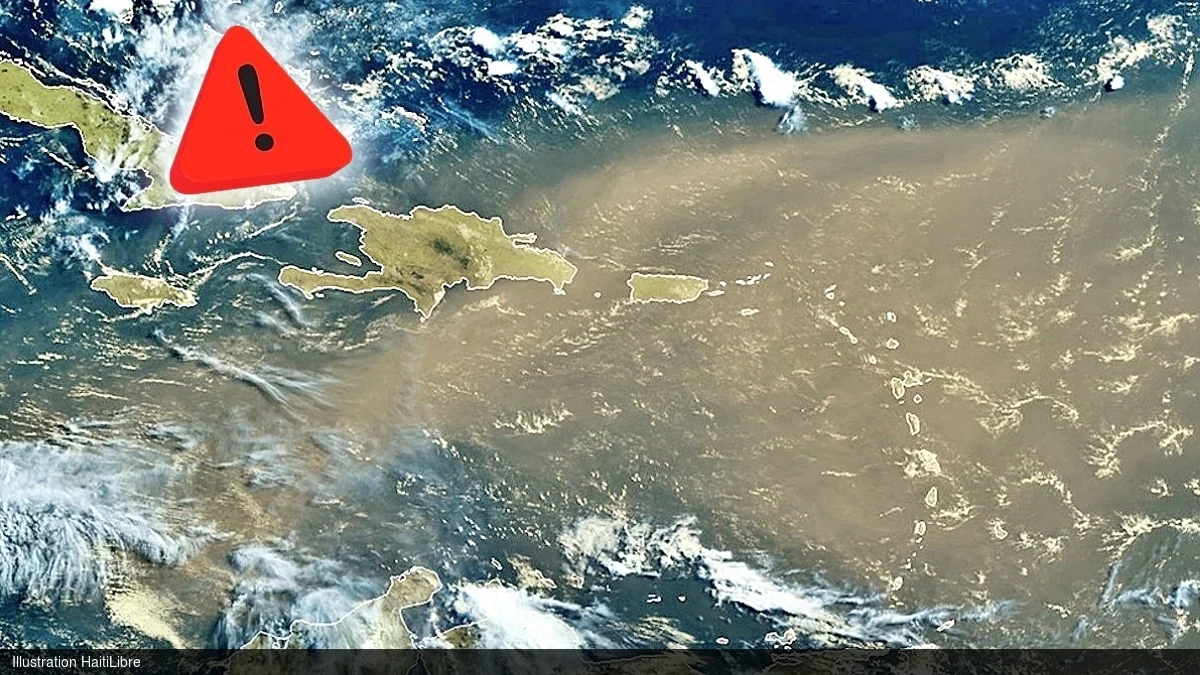
A significant dust haze, a suspension of fine particles and desert dust in the atmosphere, primarily originating from the Sahara, is currently affecting air quality in Haiti. Carried by high-altitude winds, these particles travel thousands of kilometers, obscuring the sky with a yellowish or grayish tint and degrading air quality. The phenomenon originates from powerful desert storms that lift millions of tons of sand and siliceous dust. These masses of hot air rise and are pushed by the trade winds, crossing the Atlantic Ocean to reach the Caribbean, North America, or Europe. In addition to minerals (iron, aluminum, titanium), this haze carries spores, bacteria, fungi, and pollutants. These fine particles, primarily classified as PM10 and PM2.5, are invisible to the naked eye but penetrate the respiratory system. They can cause or worsen eye and throat irritation; asthma attacks and bronchitis; and respiratory and cardiovascular problems, particularly in children, the elderly, pregnant women, people with asthma, and people with heart disease. The National Risk and Disaster Management System, along with the General Directorate of Civil Protection, is asking the public to follow these instructions : • Close doors and windows. • Do not let too much air into your home. Avoid going outside. If you absolutely must go out : Wear a mask Wear protective eyewear Avoid spending too much time outdoors Reduce your physical activity Avoid outdoor sports If you experience breathing problems, seek immediate medical attention. Learn more about particle classification : PM10 and PM2.5 are abbreviations for Particulate Matter. The number indicates their diameter in micrometers. PM10 : Particles with a diameter of less than 10 micrometers can penetrate the upper respiratory tract (nose, throat). PM2.5 : Very fine particles with a diameter of less than 2.5 micrometers. Due to their microscopic size, they penetrate deep into the lungs and can enter the bloodstream. IH/ S/ iciHaiti
|








|
|
Why IciHaiti ? |
Contact us |
Français
Copyright © 2010 - 2026 IciHaiti.com |